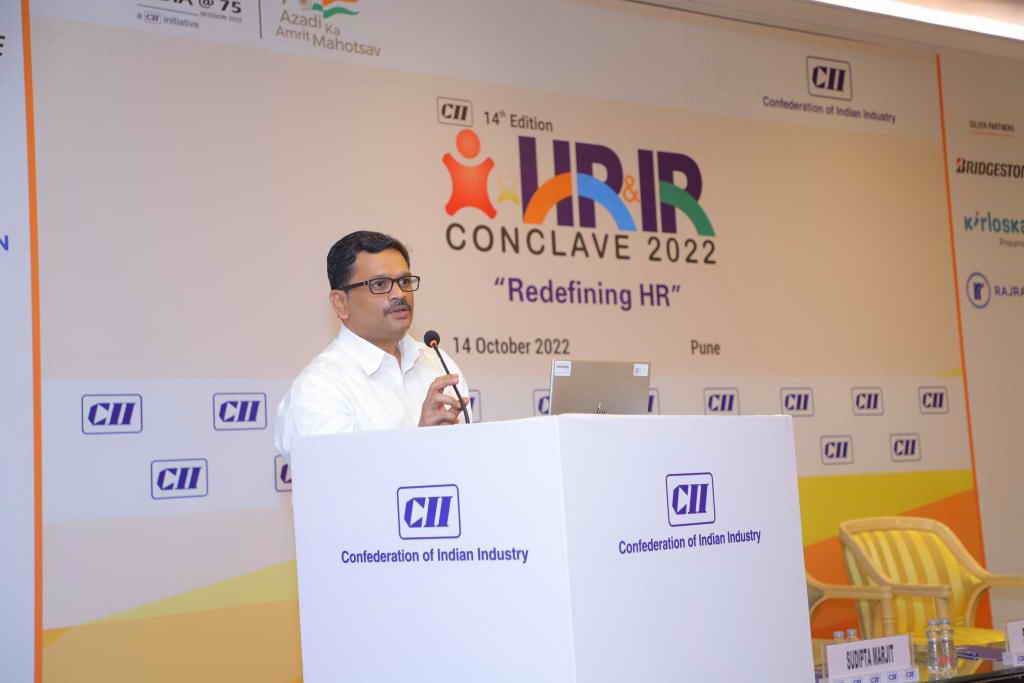
Award Winning Speech

Award Winning Speech

Sunday, October 13, 2013

Loyalty based on experience

Trust is earned, it is said. Be consistent, allow predictability, have good intent behind deeds, minimize your self interests, probably few may trust their instincts to expect a behavior pattern in any future event thereby expressing their trust in your abilities. 

Trust is thus broken when inconsistent patterns and internal bearings are challenged without reasonable rationale. 

Where and what then is loyalty? Do we earn it like trust or is it a reward in retrospective? Is loyalty proportional to the count of followers among your reports? Is it part exhibit of an internal fear of needing to be associated with a group?, how much is it enforced by society like in marriage?, Does it matter with hierarchy and used as a means for propelling self's goals ahead?, Does leadership require loyalty for moving ahead or is loyalty a selfless act as marketed in a glamorous package? 

Many places of loyalty share the facet that it moves beyond trust, for sure. There needs a connect beyond the regular context and a quite different setting from the primary need of acquaintance and needing each other. There exists a share pattern of assumed "being there" at times of need, knowledge that every other thing will be subsumed at a time we need to be together and more of a comforting around feeling than needing to be proving useful or giving a solution. 

In hindsight it is always an under explained and un-expressed experience to be loyal to some one and have loyalty towards someone we like and love. And it commands the prestige probably because of this quality to remain unexplained and experienced.

Friday, August 16, 2013

If Data is God...

If Data is God, then

Recording is the ritual
Analysis is a religion
Metrics are the texts and literature
Good KPIs the spirituality

Reporting - the community service
Morphing reality -  the Atheist
Hiding the truth - the disservice
The mirage of "being the best" - The reality

If you can't find God, then there is no Data

Thursday, August 1, 2013

Preparation is better than planning: Where I see the convergence of Lean and SCRUM

One aspect in Lean I have come to appreciate is the ability to be prepared or in an ever "on" state of readiness.

May be, adopting SCRUM model for projects, it was easier for me to relate it this way. One hall mark of agile approach is to see planning as a flexible and an on-going calibration of tasks and schedules instead of a initiation or an initial hand over document expected to be met by teams.

Again to reiterate plans are indeed a part in Agile.

While SCRUM might enable teams to work on flexible plans in projects, Lean pushes the envelope for teams in daily and recurring operations. The best methods of Lean are always and essentially simple.

The hard work is in the rigor of implementation. Reviewing standard work conditions daily, adhering to the tasks as prioritized and planned, adjusting plans while not compromising on essential focus areas as per the target condition definition are critical elements of preparation for any change in plans.

Such teams then, do not wait for plans. They know that they would anyways plan when work comes their way. And until then, they will plan to pull in the work they need.

Saturday, July 27, 2013

Unsolicited advice

While ideas and way forward can come for unsolicited advice, it often goes unheeded and resisted when offered one without asking for it. While merits may be there, it will do better to establish and gauge the context before offering one.

As managers or in a role who are expected to coach continuously, the hard work is to wait patiently till the context is established or nudge constantly till the direction is aligned, and the offer is made in a capacity of expectation or future improvement.

Continuous Improvement is one such context. As a team in continuous improvement , any advice can be unsolicited yet can never be washed away unheeded. It may not be acted upon but definitely not without giving it a try or thought.

Isnt that we want when we offer ideas/suggestions/advice ?

Wednesday, July 3, 2013

If Children can, Why can't we: Introduction to Standard Work in Lean

If Children can study, play, enjoy, socialize and have fun, how come we miss them when we are the most empowered and responsible lot ? The dawn for me came with understanding of "Standard Work" that Lean culture practitioners must have realized long back.

Children and particularly students have a great exposure to standard work throughout the years of their study. When they are ready to step in to corporate world, the "break-free" mentality takes a toll on the essential virtue that landed them their most valuable prize: Independent and a self managed life.

The ability to prioritize, schedule and work through a calendar with:   
    1. Enough variations (subjects, sports and socialize),
    2. Adapt to changes easily (studies, exams, holidays) 
    3. Continous shift to higher classes of learning and levels(improvement in value and promotions)
    4. Allocate time for personal upliftments  (Arts, Hobbies and Entertainment)
And thus, enjoy a fulfillment of accomplishment, attention and happiness

We as a child and a teen in college had this wonderful practice and model which is suddenly conflicted with endurance to sustain it when faced with the turmoils of learning on-the-job, handling personal distractions with conscious responsibilities that often become a source of conflicting priorities.

Looking at Standard work as something we are used to as a child might bring in a relief to work, play and enjoy a balanced life while building a successful professional career.

Saturday, June 1, 2013

Using "Boiler Plate" text to overcome Writers block

Recently I had writers block for more than 3 weeks. That too, on a task that is critical, important and binding upon me to complete. This is one task that cannot be delegated and is my core responsibility.

Till this task hit me I was under self-belief that given constraints and pressure, I would get myself moving and get things done. I have my standards for output and that when I apply myself whichever be the way (voluntary or forced) I would get the desired output that I am satisfied with.

This time, it was not to be. No amount of tools came to my help. I tried talking my way to get some force act on me, but they discouraged me further this time. I informed my boss hoping his mild censure will motivate me. Well, it was not to be.

The situation was strange. If I had not heard the word "writers block" I would have been frustrated at the state I was in. Here is a task where the end date is near but not too near to stretch on time crunch and with no other priorities at hand. You would exclaim, "Ideal time to be a manager." and I would agree. Yet not able to do the one thing that is the focus at the time and get it accomplished is a huge let down.

As usual, the end date got near and there was no way I could let the end date pass yet I still am far from the finish line.  And then Eureka, I found myself going at it with ease, pace and confidence. The first draft looked decently dressed and on track for a proper finishing in subsequent reviews. The magic that eluded me was: "Boiler Plate Text".

As I had to get the job done, I tried some random scribblings that I could repetitively use. The flow started to show itself. And then the scribbles fell into a pattern. I could see my writing show itself up in:
1. A conversational style.
2. Initiate my pitch from where the protogonist ends their story.
3. Giving a summary and then moving into the specifics.

Lo!. The exact phrases were in place. All I now needed to put my head on was to create the descriptive specifics. Well, that could be handled with less pain as these missing pieces were easier to visualize for the uniqueness.

And this gave me the way out of writer's block. Has "boiler plates" helped you overcome writer's block. I would be interested to know perspectives.

Sunday, May 26, 2013

Agile is not synonymous with Un-preparedness

Many a times, in name of agile, I have heard that
  1. Planning isn't necessary, as we need to work on what comes our way.
  2. Control of work is to be eliminated as members will pick the next story once they finish their current load,
  3. Clients are free to submit the changes they want and move it to iterations or extend the schedules of Sprints,
  4. Technology and architecture (code in software/IT) can be modified at later time and redone as the requirements evolve anytime during the course of the project.
  5. Team members can come and go and will only be retained for the part they need to spend their timeand many similar stories...
  6. These are perceptions that are difficult to change and are needless to be associated, just because the word "agile" loosely means "flexibility".

In fact to be agile, it requires a great amount of preparedness. Each stakeholder (Client, Sponsor, Reviewers, Consultants, Vendors, Developers, Designers, Testers, Support staff) all require to posses in themselves:
  1. Attitude, Alertness, Adaptiveness, Swiftness, Resourcefulness, Decisiveness on the job
  2. Abilities to present, praise, practice, preach and be with passion through to the job sign-off
  3. Accept self-introspection, Admit faults in open, Assess the future state continuously
  4. Channelize the learning, Champion a cause, Customize their skills

It will be great to see results from agile implemented as a people practice and the team transforming their project and results experience rather than the other way around.

Top Agile Blogs

License

Creative Commons License
Learning Practice by Shrinivasan.G is licensed under a Creative Commons Attribution-Noncommercial-Share Alike 2.5 India License All views expressed here are my own and does not reflect that of my employer or clients or any other sources.
.