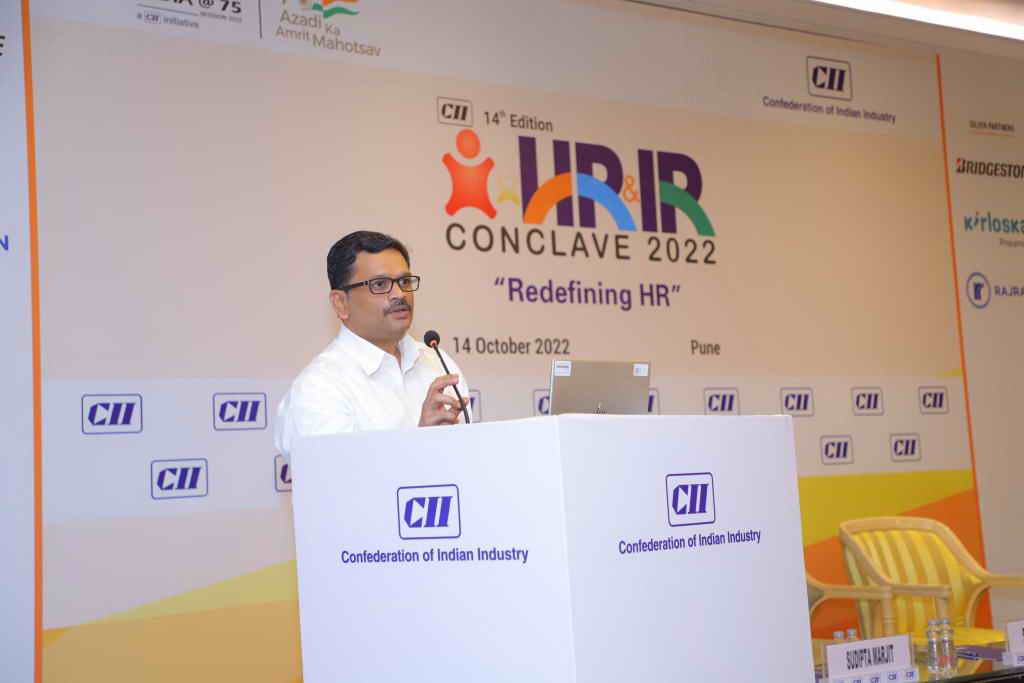
Award Winning Speech

Award Winning Speech
Showing posts with label resource management. Show all posts

Tuesday, September 1, 2009

Employee Evaluation: It is not just Performance

The distaste in professional life, is that performance alone doesn't matter in retainer-ship of employment.

The blog Why Haven't You Fired Him Yet? , is a very good read. Good performers should also be good at creating deterrents around them from being tossed out as fantasized in my earlier post.

The blog is truthful about the practical fact that to a certain level, we tend to expect a mandate and homogeneity from fellow colleagues with our own internalized systems, while becoming uncomfortable with little threats to the thought process. In our management circles, we discuss an employee viability in cost terms, and performance is always a second priority (not without reason). The costs are:
  1. "Management Overhead Cost": Inclusive of performance is the analysis of the fact whether the resource needs to be managed not only for work, but for the self-team-organization balance. It many times, unfortunately, means and is used for "falling in line", when it actually should be used to analyze, the management attention created to address a probable negative impact. For example, a resource is self managed, goes about the job in a routine fashion, and completes the job allocation in their own style. They should ideally be more, right?
But if there is a mandate that knowledge sharing is a need and must, and the cultural aspect is neglected for personal gains, then the management over head in ensuring the cultural balance is prominent than performance required.

Similarly, there is something in the mannerisms that the next level performers find choking in the superlative performer, the management over head to elevate the next level performers to the superlative league is a crucial factor in the evaluation.
  1. "Peer Value Cost": This cost is measured in comparable terms. Again, it is often than not, misused, as a favoritism, while it is to be measured to value the attention(brags/self mentions)-attraction (perks/salary) -assertion(Choosing work, being finicky of others work ) ratio vis a vis performance.
This is typically manifested in teams where employees come from different profiles: Some working their way up through experience, while others have a degree to boot at the same level, or in some instances, the variable attention just for the prestige associated with the school.

In a team of equivalent talented great employees, the overhead of giving disproportionate attention, attraction and assertion to a particular employee would mean other equated employees would leave/live with heart burn that would affect the morale, brand of the organization.

Hence while it is important to lay down the performance parameters, it is equally important to be conscious of the associated costs and keep them to minimum for a self-standing success.

Sunday, June 28, 2009

Your suggestions required!!

With my friend today, there was an interesting point of discussion.
Need your views as well. Please post them as comments to this post.

You like to work for a boss, who
a. Keeps a safe distance from team.
b. Comes across as knowledgeable and has all the answers when you approach them.
c. Shares their knowledge and enables others to do their work better.
d. is a liberal and does not give tough feedback.

There can be more options, if you opt for it. Please post them as well.

Saturday, June 13, 2009

Make it Visible

My parents have always drilled the fact that hard work pays. Well, they held me in good stead till my first job and my formative years.

After a certain threshold, they do not hold the same weight. More than work, making the work visible, is what pays and rewarded for a long time. Rather, work is to complete the projects/tasks and hard work is to make it visible !! (is it dad/mom?)

A casual chat with my sister also revealed a similar story. Her work is fine, confident, doesn't make mistakes with numbers, the work is strong support and aids well to superiors, but she feels lack of appreciative comments that she needs more often. What our parents said to us, if were true, this couldn't be the exception.

A similar tone was set in today's meeting when our head addressed my team.

"Make it Visible" was again the "parrot line" here.

A common crib was that we are not looking out for international work true to our abilities. If our hard work was to pay for us, then we ought to have scaled up dramatically with just good references created in each of our engagements.

What was lacking is the ability to ask for audience and speak of ourselves to them and give them their benefit. The audience would not come on their own. It took so much time for me to understand this point. You need to seek out your own audience one person, one company, a time to make your own mark.

How ? I am yet to start on this journey. How have you made your work visible to world and what have been your benefits?

Sunday, September 21, 2008

Where has our fire gone - Missing Love, Passion from work

This is in continuation to my earlier post - Execution Attributes. Few of my friends pointed out to the cold bloodedness implication of the post. They also said, if the fire within is missing, work is considered the same "W O R K".

This Friday late night, we friend colleagues joined together and were rattling our experiences till 3:00AM in morning. The core revolved around only one theme - Where has our fire gone ? Why do we consider work to be work and do not enjoy it anymore. The more we discussed, the more the topic seemed endless.

This post is to correct the impression and put my execution attributes in the title's perspective.

Focus, Discipline, Course Correction is still the mantra for good executor. Becoming the best requires Love, Passion, Learning which leads to enjoyment in work.

How to create the fire in team? Why should the manager instruct and police the team to work on select weekends or late nights ? Cant the team understand the scope of their and others work to make their mind on how to deliver ? Did we -4 some along with other friend colleagues expect the management to tell us what to do ? Didn't we party hard, work hard, and still wanted to be together to do more?

What should we as managers do to bring the team we worked with back in our own lives? Where will people get love, passion to their work and do what they love?

Googling for practical answers.

Parrot Lines

It is often a sub conscious act that we make monotony of ourselves by repeating our pet ideas, themes, defenses for our line of thinking, with various people, forums, and rake the topic when there is a minimal pause in conversations. Think of times, when you spoke of a topic with same sentences with same group or multiple people at multiple instances. You will often see it when we say the same story over and over again.

It is important to understand the power of this situation - "Parrot Lines".

Parrots are used in India to forecast your future (Still very popular). They are trained to see the color of a card deck and say exactly the line that is appropriate for the card. So the foreteller person,plays a mind game with you. He says that the parrot has intelligence that it chose a color card and after completing his reading, the parrot will speak a line that is apt to the contents in the color card. He says that what he said by seeing the color card that Parrot picks up is validated by parrot again. Hence, having an alibi say the same thing, makes you believe that it is about "YOU" and so the future truth is bare open by parrot and not the foreteller person.

  1. Parrot lines are instruments that serve the cause of focus and discipline. Saying them again again in same way, seeks to drive the seriousness of the point and hence rallying teams is easier. At times, they signal closed mindset as well. Rephrasing the parrot lines and reasoning the various other thinking hats, may seek to open the person for better insights, or you know where you are headed if any good discussion always ends with the same parrot line.
  2. So be it a peer, juniors/seniors, bosses, customers, vendors, partners, it is important that they know a consistent picture of you when you are not around. Parrot lines help this cause.
    • For example, when my boss asks any of my team members about a task/assignment, the member will recollect to give an answer that satisfies me and then my boss. Because, my questions are parroted every time in more or less the same sequence, the team member will exactly know the questions, will answer according to my order.
  3. Parrot lines can also serve a good reminder message for the critical success factor that is in consideration.It could be like:
  • We need to be careful if this would exceed the scope. The scope is for 80 screens. In our recent project, this is the favourite line, I start with and end with in a discussion.
  • I would prefer to put more resources and effort, but still schedule constraint may not be addressed. In one of the projects,that I am unable to close (yes, my failure as on this writing date), this is the parrot line, I repeat to customer for every request.
Parrot lines, help a manager to rally the team to a cause with commitment on "passion" than just monetary considerations.
  • Imagine the cognitive load, you are putting on me and other reviewers for this output. Can't you make it more easy to comprehend? My favourite line to all my team members, to push them for better output and buy myself more time for task on hand. ;)
  • What is your value in this system if you are just a postman, transferring deliverable from one to another? Again my parrot line to all my team members to think of their value in their system. (inherently to reduce the cognitive load on deliverables, that would have been passed without you in the system)
Parrot lines are important to put things in perspective. Perception is built over a period of time looking at consistent and inconsistent behavior of group (mostly senior management leading by example, needs to be careful about this one). When I need more than realistic expectation, my parrot lines are:

1. Let us get it done for leaving a legacy and add it to our portfolio first. It is up to company to leverage it or not.

What parrot lines do you have in your arsenal and are you conscious about it?

Saturday, April 19, 2008

Bring back the Child Again

This week I was host to 2 good guests from South Africa. The enjoyable things were, they came with specific purpose of ensuring we understand their business before we start the project. Sounds right as theory but never found in practice - right? Well, it happens at times and I had the good pleasure now.

The best outcome of such "first" meetings enables us to first talk common points across - politics, culture, people, cricket, etc.

As host, true to this tradition, me and my boss took turns for trying to provide the good time - post office formal wear meetings.

In the penultimate day, we went to "Choki Dhani" an ethnic village closer to our office. After initial rounds of stiffness between vendor and customer, the first ice breaker came when the client went for a folk dance. From there started a time filled with translation, fun, laughter, competition, camaraderie. Some folk arts were also good viewing.

"THE MOMENT" came when we all were excited to aim the arrow with a bow at a board. It was so contagious that even faltering were taken in strides. In the process the client remarked " All have become child again".

Well the same quote was repeated again when we all tried to hit a big iron plate with a heavy wooden hammer piece (typical of announcing the entry of people through a door in olden times).

"All have become child again" - Isn't it not a profound thought and statement which has deeper meanings? Thing about it.

  1. Bringing ourselves as child mean higher levels of enthusiasm into the Job.
  2. Being child enables us to work together in a playful, fun and joyous moods.
  3. Being child enables us to make the environment so bubbling with contagious laughter and lighter from work pressures that there does not exist a earning - living gap.
  4. Bringing our child selves has less to do with money and more to do with relationships and true empathy.
  5. Bringing the child in us helps the cost of retention of a employee with higher loyalties cheaper than retaining professionals.
Think about it. How much of effort, time and cost is it going to consume to make the environment lively, entertaining and providing relaxation with such mock places. Providing a small size cricket bat, tennis ball is enough to fuel the creativity of the team to create their own rules of the game.

Having a common area which requires a strenuous effort like moving a big wheel or the big iron block which needs to be hit with a big wooden hammer or trying your strength games we play as a child does not need a heavy investment but can self sustain the entire team together for a longer time.

So many things more can come in when we become child again?
Would not it be an important lesson for HR to revolve their entire energies and synergize the execution, strategy, and plan to make every one bring the child back again to your work.

What am I doing with it ? Well, cannot let the occasion pass. We came up with the idea of movie watching sessions every week with a vote on the list of movies available.

Any ideas that you can share to make us work with the child vigour, focus, passion and ABOVE ALL - WITH DISCIPLINE that we often overlook or forget

Friday, March 7, 2008

More on One to One Meetings

After practicing it as initiator for quite some time now, I feel the success of one-one lies in the inherent values present in the process itself.
1. Suits both Introvert and Extrovert behaviours: For people who are introvert or extrovert, one to one is an ideal setting. Extroverts can let go their feelings more forcefully while introverts will try to submissively but subtly put their points across.
2. Air of Confidence : News in the room is known to ONLY two people. So each of the parties know well who the source of any unwanted, unnecessary leakage is. Since it is a boss-subordinate relationship, it is always the respect for each that would make the sharing of news easier. This is important to be in "Sync with the ground realities" and getting the "pulse" of people before commitments made to the management.
3. Short and Sweet: This is something I used to like. It helped me improve my communication better. Whenever I need to ask a question to my remote boss or convince him of something closely affecting me, I felt the need for preparation to cover as much ground in the discussion within the available time. It helped me hypothesize situations and prepare statements that would lead to the points, I like to hear or get addressed.

Have you a good case to share for one to one meetings ?

Thursday, March 6, 2008

Participative Management

One of the most important aspects of a manager is to share a common bond with the team. At middle management level the best bond element that works for me is - Crib about the system. This does not necessarily mean bad mouthing the company, but cribbing about cracks, red tapes in the system sends a vibe across the team that every one is battling the same "dinosaur" ("monkey" apparently drives an unintended pun these days to cricketing people) - the limitations that restrict the good work done by us as a team and the creative ways we need to adapt to be the best in circumstances.

One thing that I always see it working is to make people see genuineness in the manager. I look for empathy from my bosses about the system(see it is a common bond at higher levels also) and trust that people looking to me as a manager expect the same. Few good to heart initiatives I suggest because they have worked for me are:

1. One to One: I learnt it in my first company from my bosses who were disciplined and diligent in giving due importance to this meeting.

They use to manage it with recurring advanced meeting requests , apology emails (once in a while with proper rescheduling if required), asking what we can expect from next one-one meetings.

Few things that was never attempted and should never be done are:
1. Do not attempt at improving the quality of interaction in first few meetings. The bonds needs to be established first. The agenda and discussions will go awry. It is better to let it pass till the discussion carries itself forward. There can NEVER be a case where One to One will ever become bitter.

2. Never postpone a meeting as an initiator. If there is no topic or no need for a discussion, all it takes is a 5 minutes talk to listen to agenda and set next course of action.


2. Throw a Party: Something I really love to arrange or get done, is to throw a party suiting the audience style. Include everyone involved to make your life easier. Socialization is the best way for slipping the team to a "comfort zone". It has been the biggest teacher for me to know the "dialect" of the group. The way the team behaves, understands, and reacts are important aspects for a manager to not miss as much as deadlines, efforts. However efforts, deadlines, logs, issues, risks are manager's "dialects". Expectation of conformance to a foreign dialect with a team is downright insensitivity.

3. Follow up on smaller group parties: A genuineness can only be established by repetitive action. Once in a blue moon or sudden surprises get branded as "mood swings" of manager. Hence whenever possible, take smaller groups which are naturally formed wings of the team out for a party. It is important to be in team's familiar surrounding and see their potential.

4. Ensure that project party "overdue" is organized by you: Organizations need to be most happening place to spend most of the waking time. Hence "fun" theme events of HR are not inclusive models of team building exercise. It is important that teams "feel" the bond, live the life in office rather than earn the living. Hence if the team you inherit has a long overdue project celebration, that is the best moment to show the capability to make people look to you at having excelled in doing something that was given not to happen in their life with the company.

How did you participate with your team today ?

Saturday, March 1, 2008

Evolution Story - Power of Need

The team that I inherited have many things in common - long time bonds of 3+ years with same company and almost all Maharashtrians. This would be the most ideal suited team for any manager - consistent performance, all good proven horses for longer races, great comfort factor and synergies within members, solid back up without expressing authority - What more could I ask for?

Isn't it the dream team that a manager would like who can spend time focussing on tasks at hand rather than work on individuals to ensure bonding and manage expectations and attrition which take time away from productive work ?

When such teams exist and you are new and want few tuning to be done for newer business needs, one long lesson I learnt after 1 year is to make the change a compulsion not through brute force or management decision but bring in the Need.

Case in Point: Because of the close knit nature, business was done as usual in tea breaks and regional language "talks" in canteen and numerous informal means. What this means to a manager is to be careful in bringing in fresh talent in the team and yet maintain the team spirit. Further with business expansion on the cards, there is always the lurking danger that the team will travel to various locations and still the "camaraderie" needs to be present from distance.

These required tapping the formal communication channels and utilizing them effectively. Making sure that formal communication means are practiced in a safe closed environment and improved, while informal channels will still act as life support system till the protocols and understanding is in place.

However, this realization seemed more compulsive only to me to ensure change happens and it happens fast. But moving from "comfort" zone of a well entrenched team (not just one but many) is a typical "new manager syndrome. It is tedious, pisses off most people and some consider it to be a case of "false alarm" or pressing the "panic button" too early.

The change happened recently when we were in fire fighting mode and the blame game started in a project. THe same project has panned many blog titles in last month :). The team members in the hidden firing line ( behind me), as if by magic were writing and sustaining themselves against the onslaught through carefully drafted emails, status updates, clearing the intent and scope of deliveries, making sure that "HELP" is duly recognized explicitly, telephonic talks, reference to discussions and surprisingly not wanting my interference.

The stress and strain of the entire episode led me to know the power of need and now our team have a couple of members who can be marketed on their own. I still have to work on the remaining team.

Can you help me with "NEEDS" you "CREATED" for change management?

Top Agile Blogs

License

Creative Commons License
Learning Practice by Shrinivasan.G is licensed under a Creative Commons Attribution-Noncommercial-Share Alike 2.5 India License All views expressed here are my own and does not reflect that of my employer or clients or any other sources.
.